
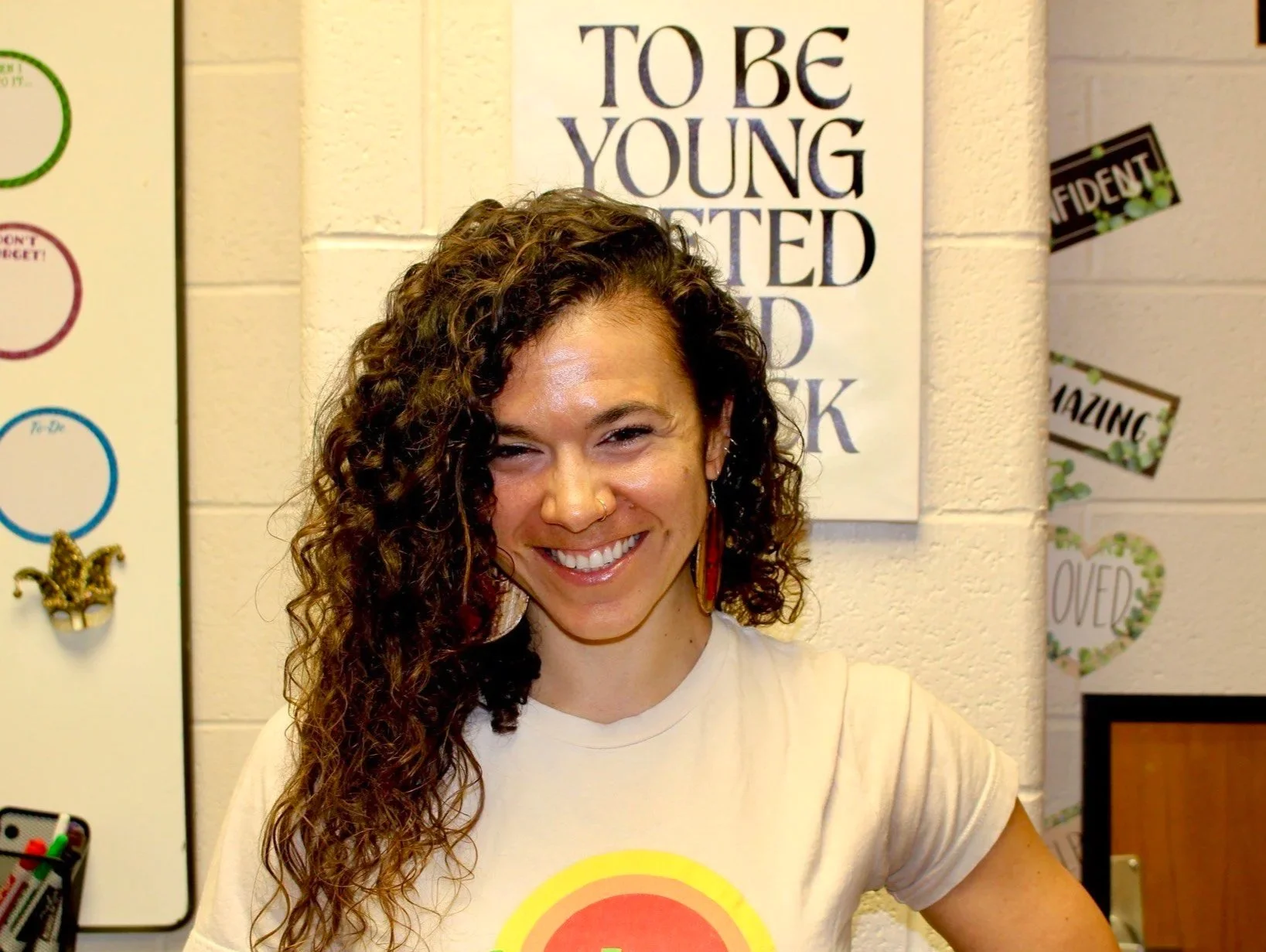
***EDITOR’S NOTE: A recent internal review by Philly Educators for Palestine revealed that Hannah Gann falsely represented her identity and is alleged to have misappropriated funds and resources. Gann has been removed from the organization, and an investigation is still ongoing.
In the midst of a budgetary crisis that would see the closure of 17 public schools this upcoming school year, the School District of Philadelphia also seeks to offload their acclaimed educators who use their voice. The city’s public school community has shown unwavering support for Ismael Jimenez, calling for his reinstatement; however, the Board’s silence raises serious questions about censorship and the district's educational priorities.
We recently spoke with Hannah Gann, an educator with 16 years of experience—eight of those within the district—and co-founder of Philly Educators for Palestine. She emphasized that a key duty of an educator is to provide students with the tools to critically analyze information and avoid manipulation.
Gann noted that students frequently bring current events into the classroom, asking about topics like Iran and the possibility of global war. She asserts that avoiding these topics is “a disservice to young people who are seeking a safe space to discuss the world around them.”.
Gann provided insight regarding transitional experience from teaching into community organizing, dating back to 2013, “I got into community organizing because I was seeing the impact that this closure was going to have on my students and their families. I genuinely believe that anyone who is doing the real work of being an educator—where you build meaningful relationships and become deeply invested in the community—can’t help but become an organizer. You see all the material conditions that are limiting and depriving our students, and the structural injustices that make it hard for them to actualize their gifts and potential.”
Gann emphasizes that her involvement in mutual aid intersects with her role as a teacher, as she witnesses her students and their families participating in these efforts.
“I would have to be completely cutting off part of my consciousness to not want to organize when I see what my students go through and the barriers they have to overcome to get an education. That is why it’s our responsibility to organize. A lot of the teachers who have been targeted specifically were responding to needs they saw in their Palestinian students.”
“If you’re educating them, you’re listening to them. And if you listen to our people, many see a disconnect between what they are asked to do in school and what is happening in their real lives.”
In conversation with Gann, regarding the current climate of repression in education and her experience working with Jimenez, Gann highlighted that the repression many educators face stems from a fear that providing students with research tools will dismantle the narratives used to justify war and imperialism. She emphasized that while she encourages her students to read a wide range of historical perspectives—including those she fundamentally disagrees with—those pushing an agenda of imperial conquest and "monied interests" seek to restrict information to prevent students from forming their own conclusions.
Regarding Jimenez’s treatment, Gann noted the transformative impact he had on the department, describing his professional development sessions as purposeful, intentional, and intellectually stimulating. Despite his positive influence, she mentioned that he was suspended based on what she describes as specious claims, such as the erasure of European history. Paradoxically, much of the controversy arose just days before he was scheduled to take the entire social studies department to the Museum of the American Revolution. Gann believes these actions are the result of a targeted response from Zionist groups and pro-charter school interests who have been focusing on Jimenez and other educators.
Gann recalls incidents where a video truck parked outside of her school during dismissal, displaying the message “Philadelphia’s leading anti-semite.” A few weeks later, the same truck appeared at the school district headquarters at 440 North Broad with a photo of Ismael Jimenez and the caption, “This is why we need school choice.”
It was later discovered that the organization responsible for the truck, Accuracy in Media, is funded by billionaire Jeffrey Yass. Yass is a prominent donor to Donald Trump who is a major supporter of the Charter school initiative.
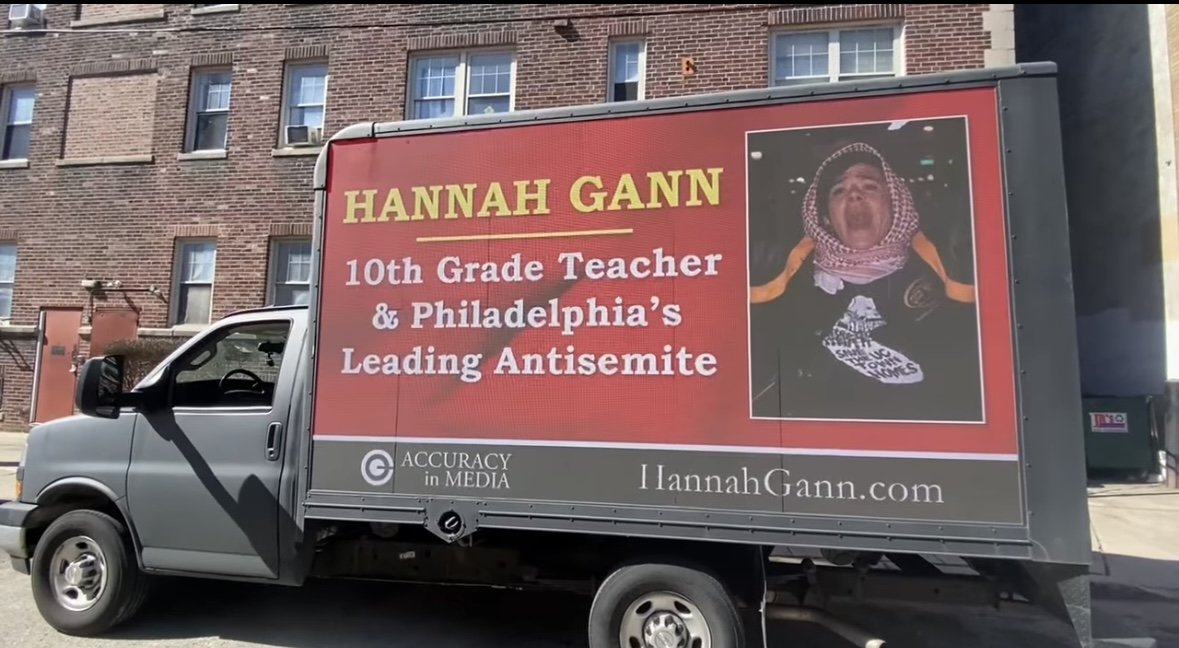
One of Accuracy in Media’s mobile billboards, targeted at both Ismael Jimenez and Hannah Gann. The organization seeks to paint the teachers as “anti-semitic” for speaking out against the Israeli government.
Gann spoke further on Yass’s influence on the push for charter schools and the targeting of educators. Pointing out specifically, Yass founded Boys Latin West Philadelphia and continues to advocate for school privatization under the guise of "school choice,” a movement that has caught steam amongst the billionaire class. Back in 2024 Roc Nation billionaire Jay-Z sparked controversy when he pledged his support to PASS (Pennsylvania Award for Student Success) a Republican-led effort to boost the school choice movement, siphoning funds from the school district. This shift moves education from a public good into the private sector for profit.
“Yass was funding this truck that had the image of Ish saying ‘this is why we need school choice,’” recalled Gann. Additionally, the billboard targeted Gann directly, “It said one of Ismael’s teachers with me speaking at a weekend action completely outside of my role as a teacher.” This was part of a broader campaign where, according to Gann “hundreds, if not thousands of emails sent to the school board, City Council, even state leaders…” Jimenez, Gann and other educators were broadly painted as anti-semitic. The ongoing campaign spread widely. A simple web search of these teachers returns petty accusations and doxxed personal information about them.
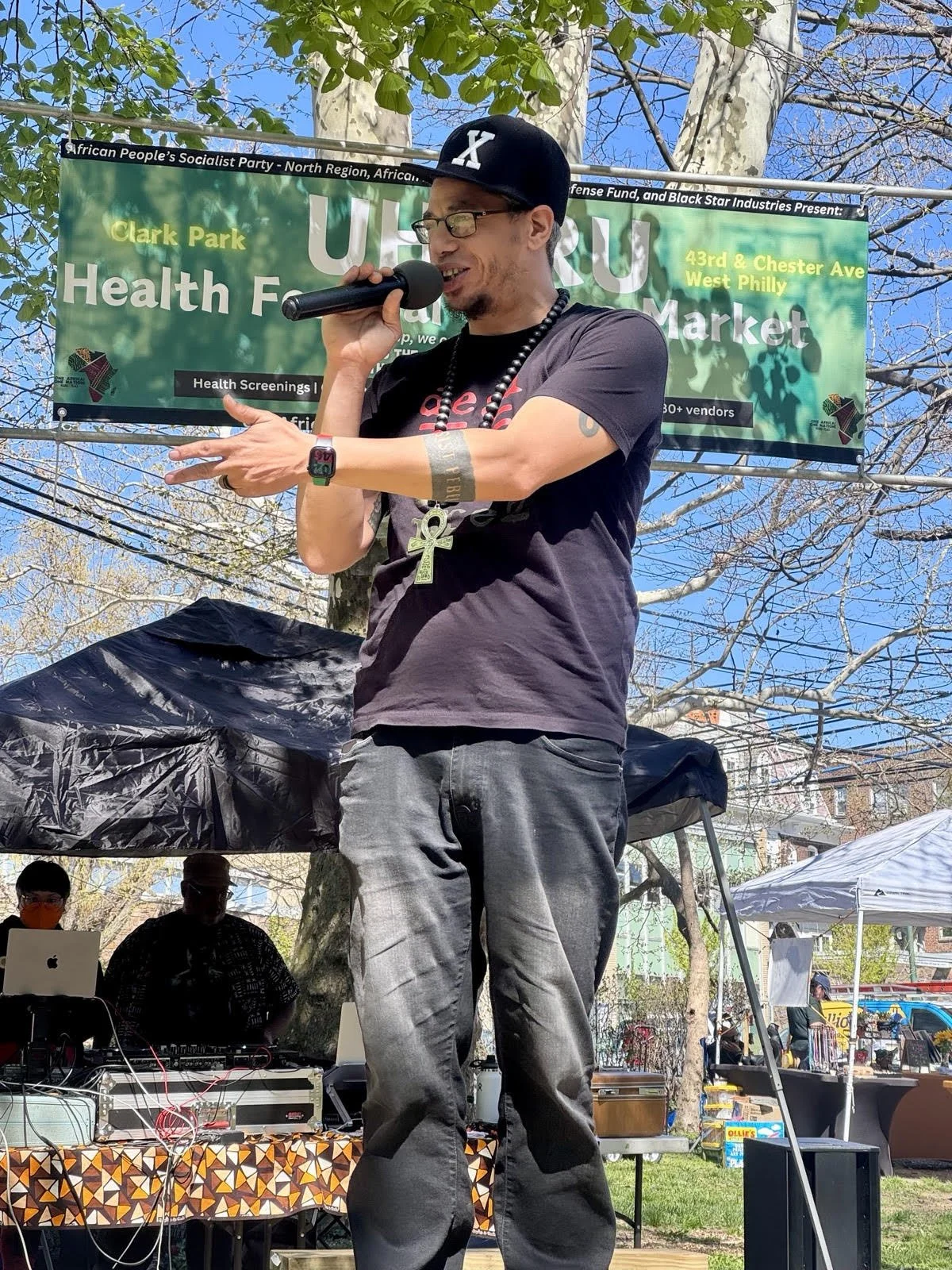
Ismael Jimenez speaking at the Uhuru Marketplace in Clark Park.
Gann believes that Ismael’s suspension was a response to these coordinated attacks and political pressure rather than any legitimate concerns regarding his professional performance. Some key aspects that Gann felt relevant were the targeted attacks on Black educators who focus on anti-racist curricula. Gann highlights the disparity in disciplinary actions and harassment faced by Black educators compared to their white counterparts.
“Keziah Ridgeway was removed from her position teaching at Northeast High School for the bulk of the school year and then she was force-transferred to a different high school. So the two educators who are facing the most material consequences for speaking out about Palestine are two Black educators…When white or white-passing or closer to white educators like myself say (the same things) we don’t get the same discipline."
While speaking on the historical solidarity between Black and Palestinian liberation struggles. Gann highlighted that the accusations against Ismael are direct attacks on curriculum. She noted that these critiques often use right-wing rhetoric, such as broadly labeling their work as "teaching CRT," in an effort to diminish educators who center marginalized voices and critique mainstream history. Ismael’s work focuses on ensuring social studies departments analyze systems of hierarchy, including racial capitalism, regardless of the specific history course being taught.
Furthermore, Gann discussed the intersectionality of these struggles, noting a long history of solidarity. She referenced Malcolm X’s visits to Gaza and the Black Panther Party’s support for Palestine following the 1967 war. This connection continues today; for example, during the Ferguson protests, Palestinians shared advice with organizers on how to withstand tear gas—the same equipment often tested in occupied Palestine.
Ultimately, these attacks represent a concerted effort to undermine two freedom movements simultaneously. Gann remains committed to developing lessons that address racial justice and encourages educators to be “in deep and meaningful community with Black folks and working for Black liberation.”